
Before anyone signs up, they want to see it. The course, the crowd, the finish line feeling.
Social media plays a big role in that decision. When it’s working, Instagram doesn’t just build awareness. It drives registrations and builds a community that keeps people coming back.
This guide highlights our top 10 Instagram content ideas that actually drive sign-ups, based on where we’re seeing the most traction and daily athlete engagement.
What works on Instagram:
Video wins. Finish line clips, course previews, people celebrating. This is what gets watched.
Stories keep you relevant. Quick updates, reposts, countdowns. Nothing fancy, just consistent.
Feed posts drive discovery, make them count. Reels, strong visuals, and key announcements. This is where new people find your event and where your best content can keep working over time.
Consistent branding builds recognition. You don’t need a full branding kit, but stick to a few main colors and one to two fonts. It makes it easier to create content quickly and helps people instantly recognize your posts.
Bottom line: If it looks fun, people will sign up.
10 content ideas that work:
1. Athlete stories
You don’t need a full production. Just share real people and real experiences. Athletes connect with stories they can see themselves in.
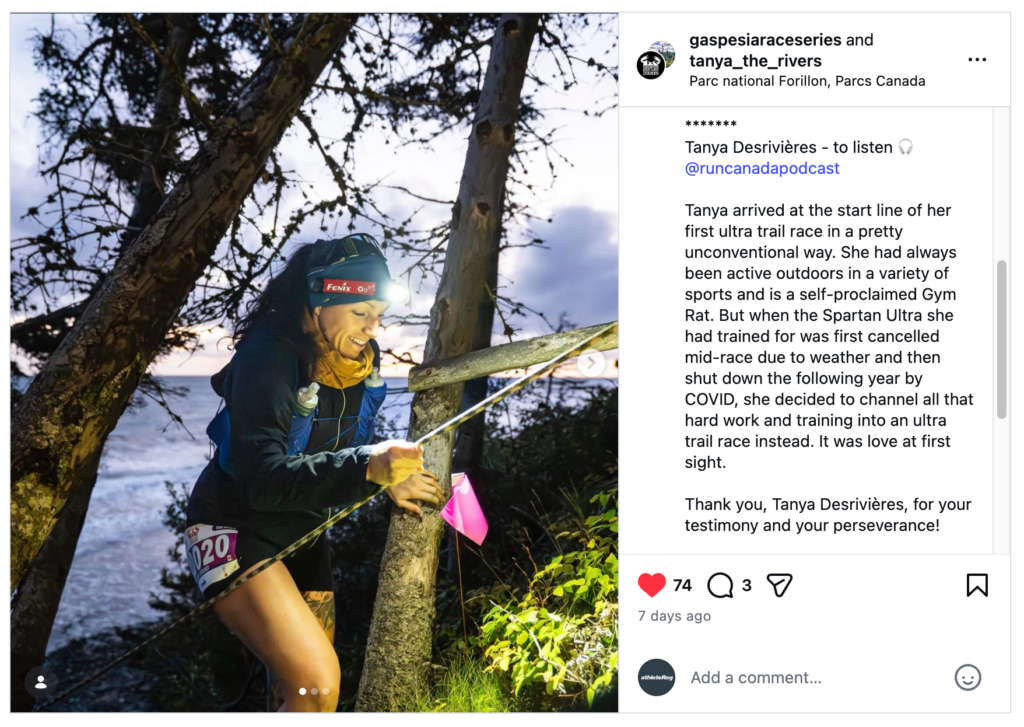
Example post from Événements Gaspesia:
A simple testimonial paired with a real race photo. Nothing overly polished, just an honest moment and a story that feels relatable.
Bonus: “A day in the life” videos tend to perform especially well on reels. These are simple, authentic clips where athletes or event staff show how they prepare. Training, meals, early mornings, rest days. It’s a behind-the-scenes look people don’t usually get to see.
Why this works: People want to picture themselves there. When the story feels real and relatable, it lowers the barrier to signing up.
2. Registration content (this one actually drives sign-ups)
This is where you tell people exactly when and why to register. Don’t assume they know. Make it clear and timely.
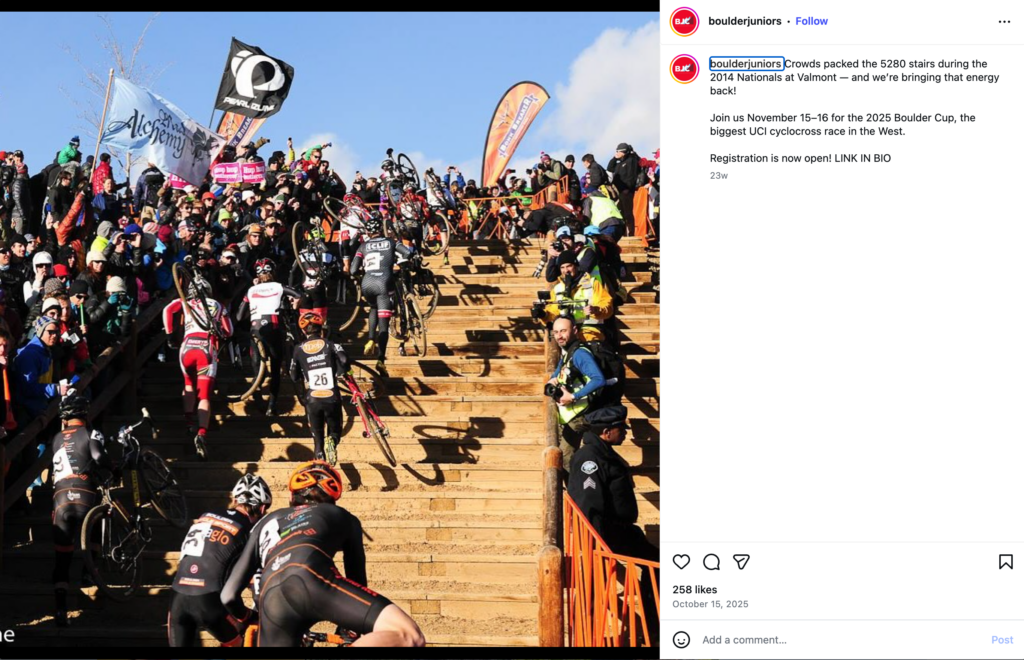
Example post from The Boulder Cup:
High-energy race visuals paired with a clear call to action like “Registration is now open” and “Link in bio.”
What to post: “Registration opens Friday at 10am 👀”, “Early bird pricing ends tonight” or “Price jumps tomorrow.”
Layer in value so people know what they’re getting:
“Your registration includes:
✔ Custom event shirt
✔ Post-event food + drinks
✔ Finish line photos”
Bonus: Use stories for countdowns and reminders leading up to key moments like registration opening or price increases.
Why this works: Most people don’t sign up the first time they see your event. Clear timing, urgency, and value give them a reason to act now instead of putting it off.
3. Course preview / location content
After the recent U.S. Half Marathon Championship mishap where top runners were led off course, it’s a good reminder of how important clear course communication really is.
People want to see where they’re going to be. The more they can picture the course ahead of time, the more confident they’ll feel showing up on race day.
People want to see where they’re going to be in order to plan ahead and visualize how their day will go.
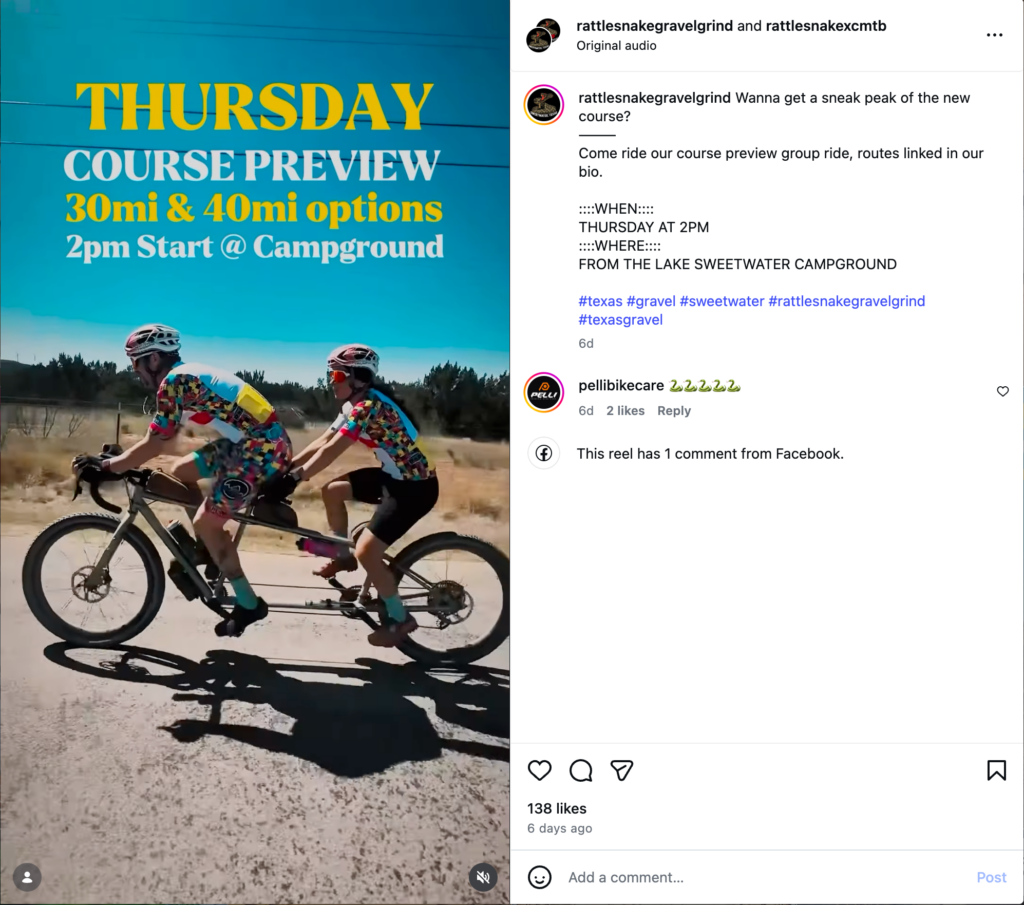
Example post from Rattlesnake Gravel Grind:
A simple course preview with key details like distance options, start time, and location, paired with real footage of the terrain.
What to post: Short videos of the course with light text overlays: “Mile 3 → views like this”, “Mile 7 → slight regret” and “Finish line → worth it.” Or keep it even simpler: “This is your event view for 13.1 miles”
Why this works: When athletes can see the course and understand what to expect, it builds confidence and makes the decision easier.
4. The people behind the event
Show the people who make your event happen. Staff, volunteers, partners. These are the faces behind the scenes that participants don’t always see but rely on every race day.
Example post from SBT GRVL®:
A simple photo of volunteers paired with a caption that highlights their role and impact.
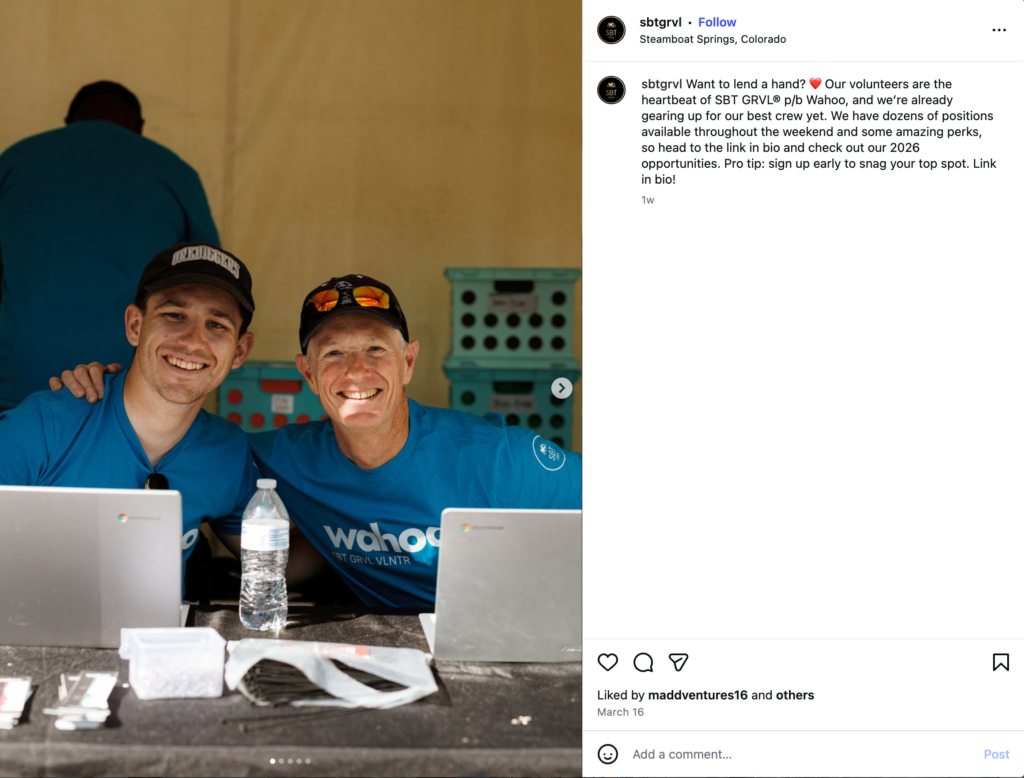
What to post: Quick spotlights on volunteers, staff, or partners. Keep it simple. A photo, a name, and what they do.
Why this works: People sign up for events that feel personal. When you highlight the humans behind it, it builds trust and makes your event feel like a community, not just a race.
5. Humor
Don’t be afraid to show some personality and the not-so-perfect parts of events. Show the “behind the scenes”. If things are overly polished and branded, this can often get overlooked for an ad.
Example post from Barry Roubaix:
A playful, unexpected visual paired with a caption that doesn’t take itself too seriously.
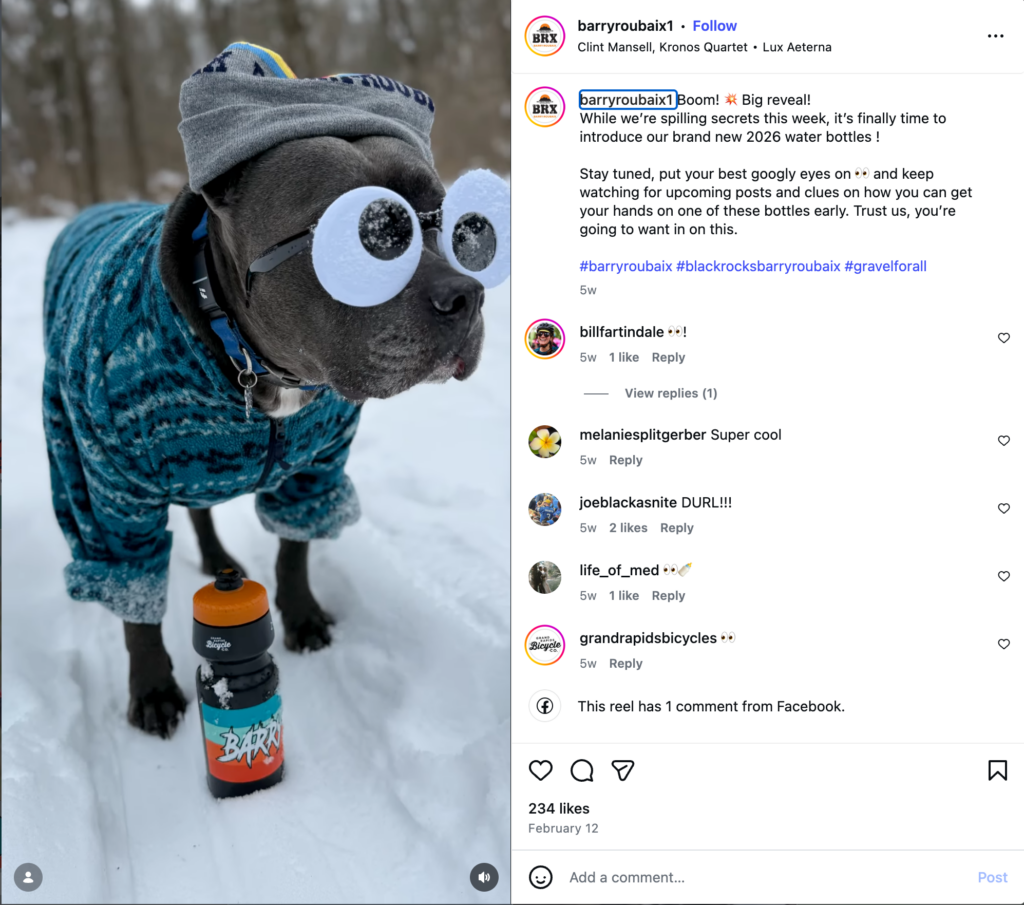
What to post: Light, relatable content that taps into the real experience of racing. The highs, the struggles, and everything in between. “Want to question your life choices for 2–8 hours??? Come compete.” or “PR, beat your friend, or just survive, we support all outcomes.”
Why this works: Humor gets shared. When people see something that makes them laugh or feels relatable, they’re more likely to send it to a friend, and that’s how your event reaches new people.
6. Countdown content
Don’t forget about the pre-event content. Don’t just post everything on event day, build a little momentum leading into the big day.
Example post from OZ STAGE RACE:
A detailed overview of the event weekend that helps participants understand what to expect and how to prepare.
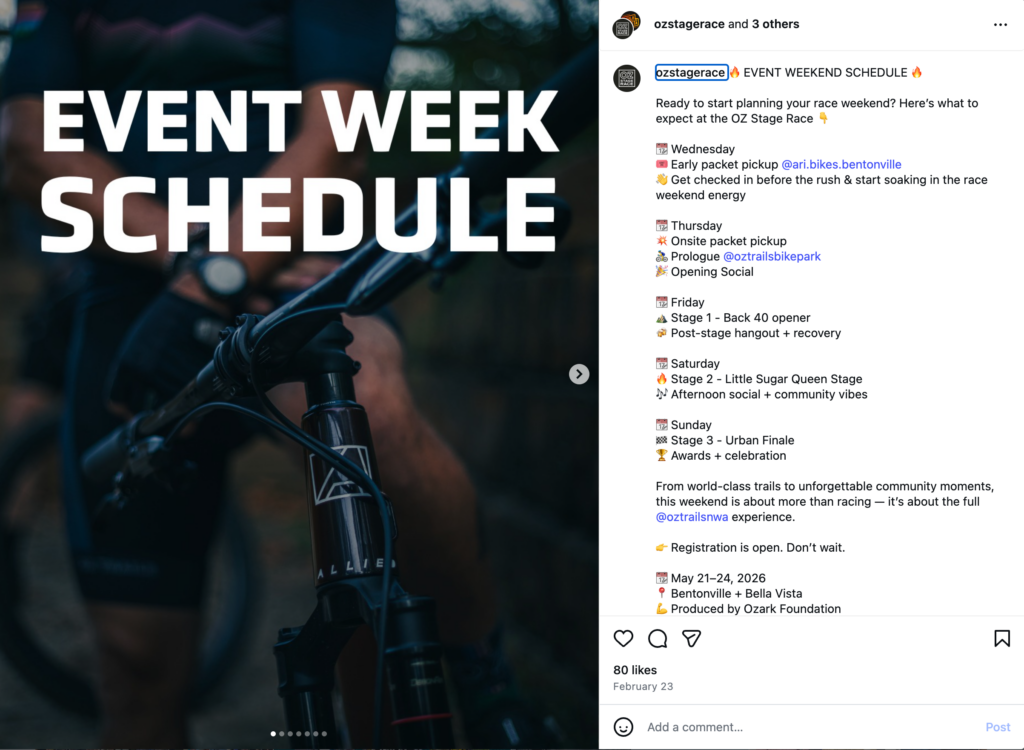
What to post: Simple countdown-style content in stories: “30 days out 👀”, “7 days out (have you trained??)” or “Tomorrow. No turning back now.”
And mix in helpful reminders: Schedule highlights, logistics, what to bring, or key event details.
Bonus: Use built-in features like polls or questions to make it interactive: “How are you feeling?”, “Have you trained?” or “Are you traveling for this event?”
Why this works: As the event gets closer, people are looking for information and reassurance. Showing up consistently keeps your event top of mind and helps participants feel prepared, which increases the likelihood they show up and stay engaged.
7. Polls / Questions
This doesn’t need to be overly strategic. The goal is to get people interacting with your content in an easy, low-effort way.
Example post from Rule of Three:
A simple question about race options sparked a lot of comments and engagement because it was something participants actually cared about.
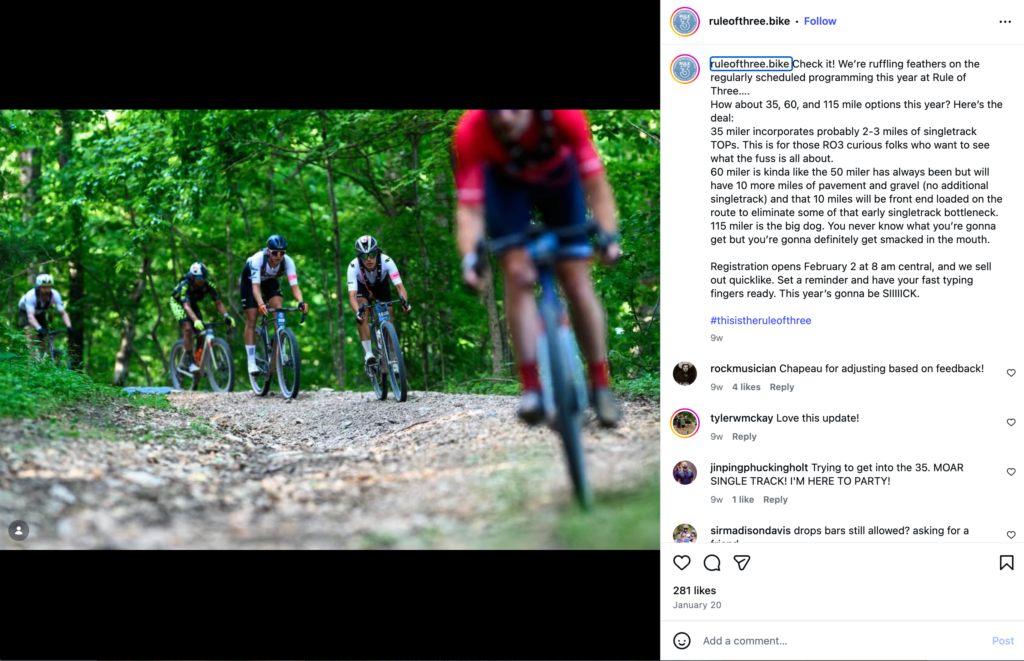
What to post: Keep it quick and easy to answer. Stories work especially well for this, but simple questions in captions can drive engagement too. “Have you competed with us before? yes / not yet”, “What distance are you doing?” or “Trail or road?”
Why this works: Every tap, vote, or comment signals interest. The more people interact with your content, the more often it shows up in their feed, keeping your event top of mind.
8. Training / what to expect
This helps people feel less intimidated and prepared for event day. You are their source of truth, so people will likely be checking in for the latest information.
Example post from Red Rock Roubaix:
A direct, informative breakdown of the course and what riders can expect, delivered in a way that’s both helpful and entertaining.
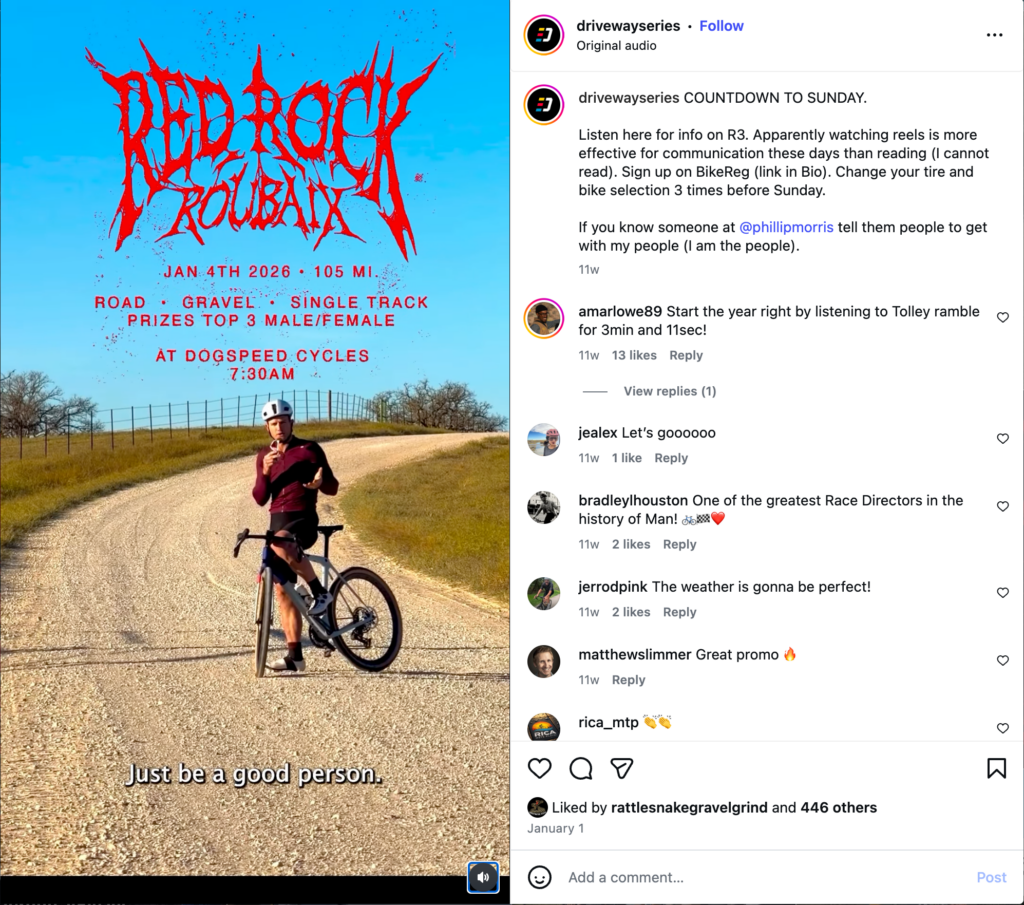
What to post: “First time racing with us?, “Here’s what to expect:” or “3 things to bring on event day that people always forget.”
Why this works: Uncertainty creates hesitation. When you answer common questions upfront, you build confidence and make it easier for someone to sign up and show up ready.
9. Repost your athletes
If people are tagging your event, use it. This is some of the easiest and most authentic content you can share.
Example post from Boston’s Run To Remember:
A collaboration post of a participant’s experience that highlights the emotion and meaning behind the event.
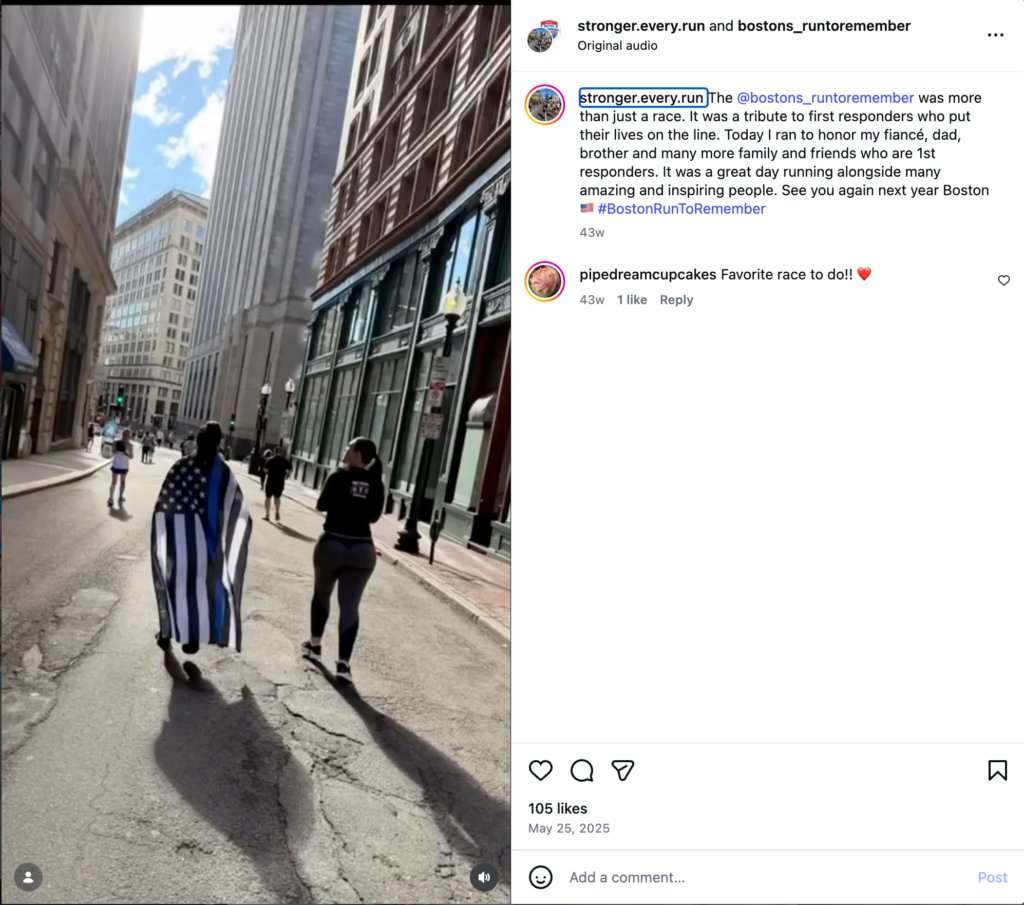
What to post: Repost stories, photos, or videos from your participants: “Long run done. See you on race day” or “This is the kind of energy we like to see.”
It takes seconds and gives you a steady stream of real content.
Why this works: This is your social proof. When someone sees real athletes enjoying your event, it builds credibility and makes them more likely to sign up.
10. Local collabs
This is one of the easiest ways to grow your reach.
Example post from NED Gravel: A training series in partnership with a local cycling community, giving people a way to connect and prepare ahead of the event.
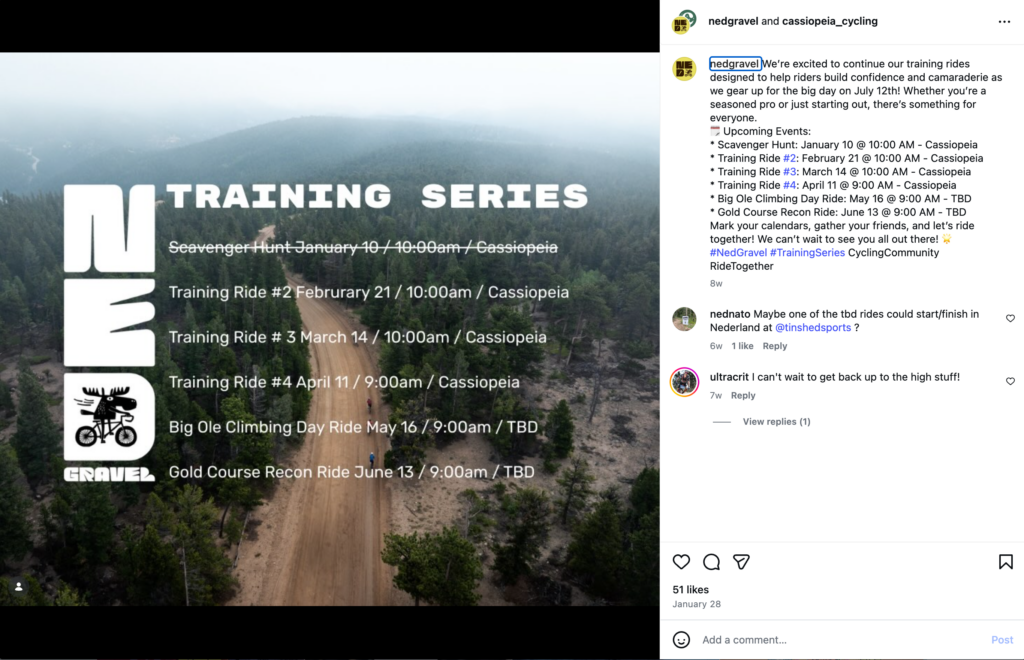
What to post: Partner with local run clubs, bike shops, coaches, or gyms: “Running with [run club name] this Saturday 👀 or “If you’ve been thinking about signing up… this is your sign.”
Or have a coach or group leader share: “We’re training a group for this event. Who’s in?”
Why this works: You’re not starting from scratch. You’re tapping into an audience that already trusts the group you’re partnering with, which makes it easier to reach new people and turn that interest into registrations.
How this turns into registrations
If someone sees your post and wants to sign up, don’t make them hunt for it. Make the next step obvious.
What works:
- Captions that clearly say “Register now”
- Link in bio → straight to registration
- Stories with a clickable link and reminders when prices increase
- Updating your bio as soon as registration opens
You don’t need to be perfect at this. Consistency matters more than polish.
Show up regularly, make your event look like something people want to be part of, and make it easy to take the next step.
That’s where athleteReg comes in. From simple registration setup to built-in exposure across the Outside Network, it’s designed to help you turn interest into sign-ups.
While you are at it, give us a follow at BikeReg and athleteReg. See you on the internet!